Beginning of the Year Writing Tips for Kindergarten
Teaching writing at the beginning of the year can be tough. Take the stress away and make teaching writing fun and effective with these kindergarten writing tips, activities, and free writing centers!
At the beginning of the year, students enter kindergarten with various abilities. You may have students writing sentences, just their name, or not even knowing how to hold a pencil.
In the first few months of school, the main focus of kindergarten writing is developing fine motor skills, holding a pencil correctly, and learning letters and their formation.
It's all about the basics, such as writing their name and learning to move their pencil from left to right, top to bottom on the paper. It takes time to help students learn proper pencil grip, spatial awareness, and directionality.
Don't stress about diving right into writing sentences and learning different types of writing. These kindergarten writing tips will help you support your students as they build foundational writing skills at the beginning of the year.
Kindergarten Writing Tips for the Beginning of the Year
Tip #1: Create a special place to write in the classroom.
Writing time may feel a little nerve-wracking for some students, especially if they lack fine motor skills and confidence. Make writing time fun and exciting for students by creating a special place to write in the classroom.
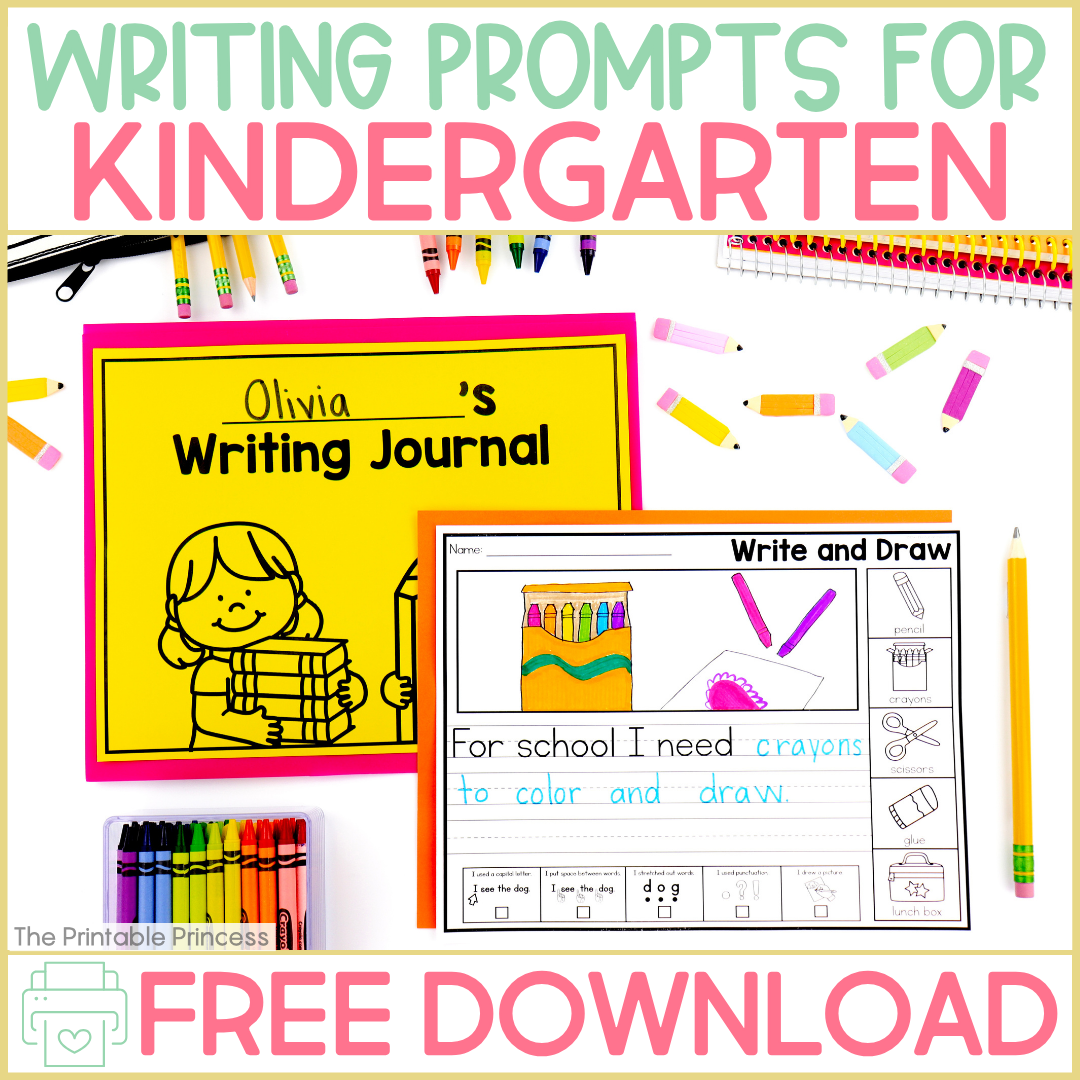
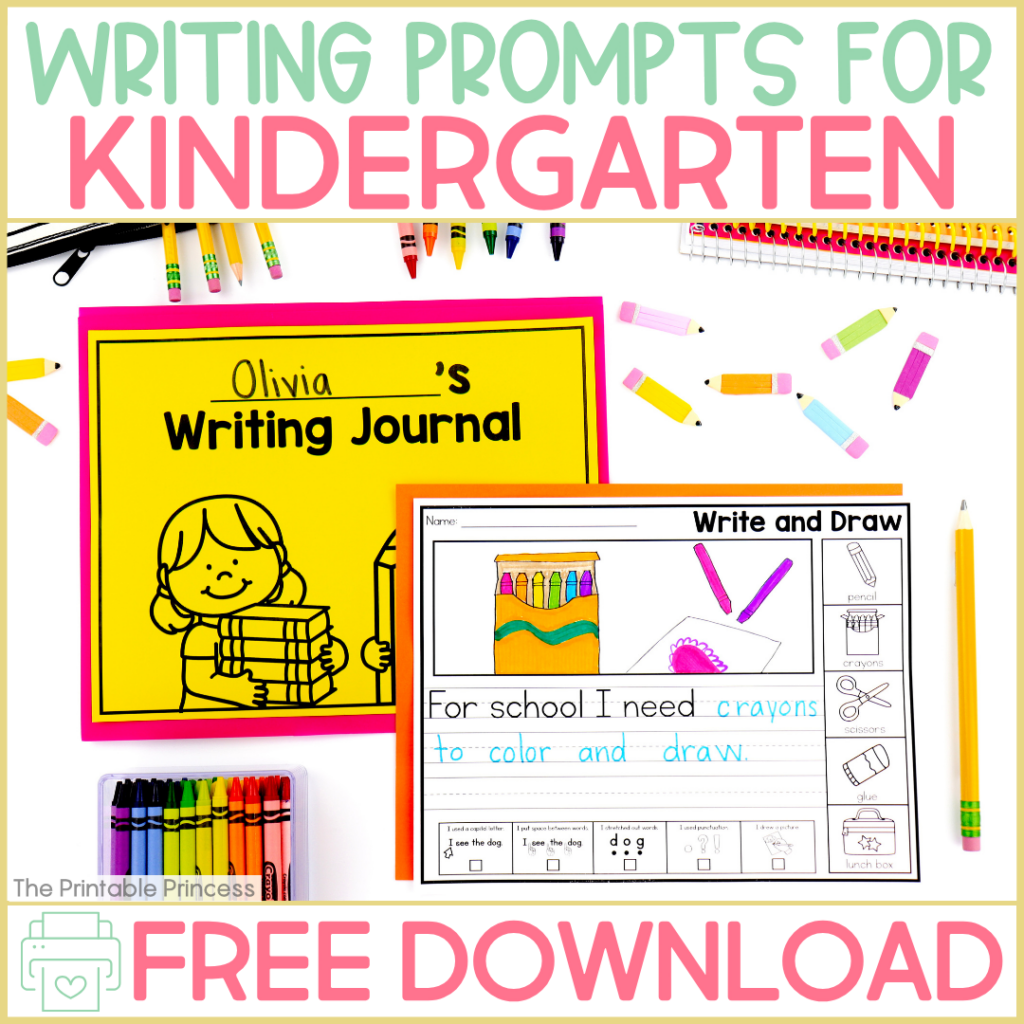
Set up the environment for creativity and writing success. Give your students special writing folders of their own. Let them experiment with various writing utensils, such as pencils, markers, and crayons.
Provide an array of kindergarten writing activities and topics for students to write about. This will help make writing feel less intimidating and more of a creative learning experience for students.
Tip #2: Take it slow.
While there may be a lot of writing skills on your pacing guide to cover, don't panic and try to rush or teach them all at once.
Instead, conduct short mini lessons with your students to teach them all of the mechanics of writing while keeping their attention.
Here are a few key kindergarten writing skills you can teach your students using bite-sized mini lessons:
- Holding a pencil.
- Being safe with pencils.
- How to place the paper up and down.
- How to hold the paper with their opposite hand when writing.
- How to draw a line, a curvy line, and a circle.
- Where and how to write their name.
- How to draw a simple picture or shape.
Tip #3: Make writing a sensory experience.
Kindergarteners are curious and love to experience the world around them through their senses. Making writing a sensory experience will help them with development as well as fine motor and writing skills.
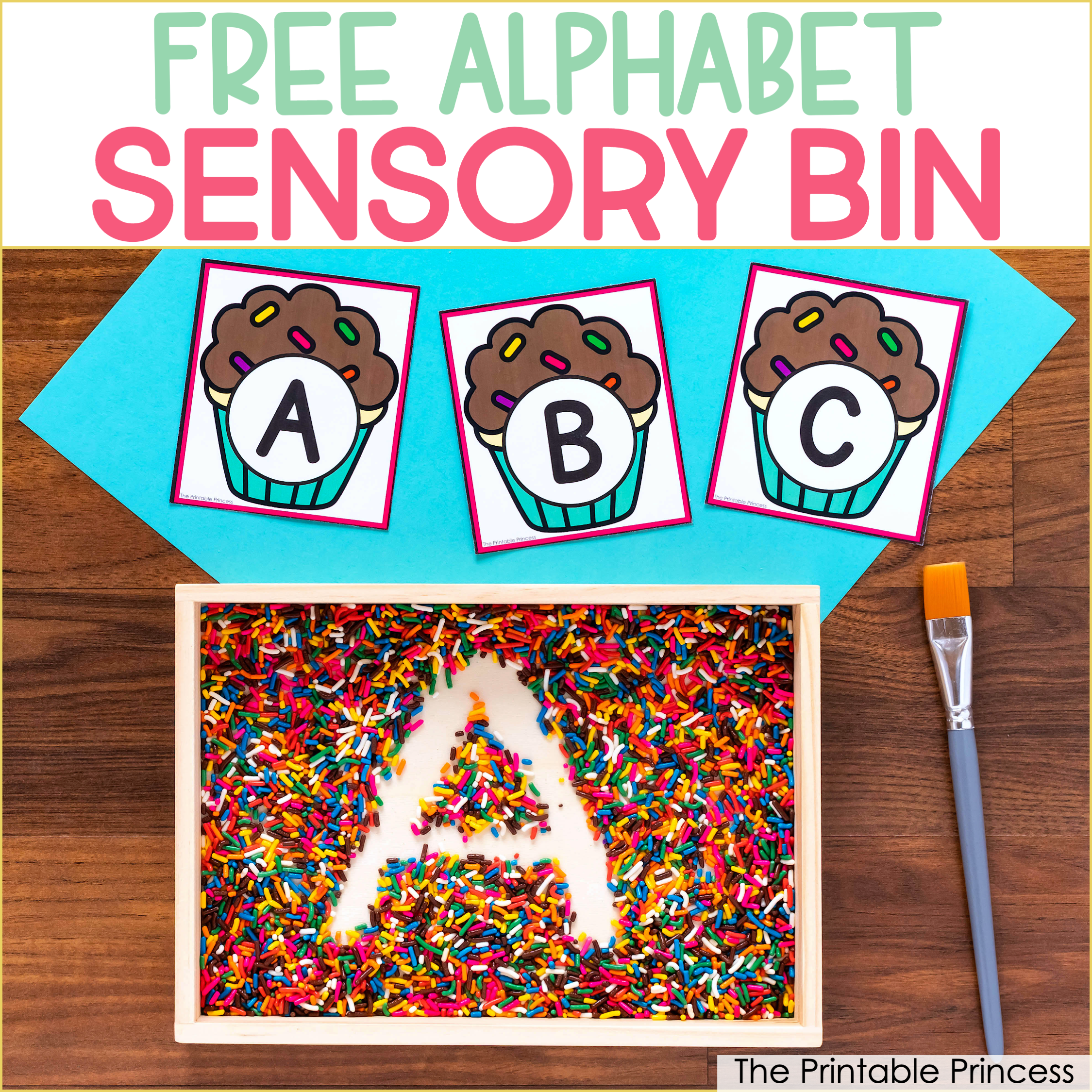
Have students write their name, letters, numbers, and create shapes with various tools in sand, rice, sprinkles, gel bags, etc. They can use tools such as paintbrushes, magic wands, spatulas, etc.
By gripping various tools and working with different materials, they'll build fine motor skills and coordination.
Tip #4: Model everything!
The name of the game at the beginning of kindergarten is model, model, model! This is especially important when it comes to teaching writing skills.
Break out your document camera, chart paper, or whiteboard and marker and model how to hold a pencil and paper, where to start writing, and how to move across the paper. This gives students an important visual aid as they learn these foundational skills.
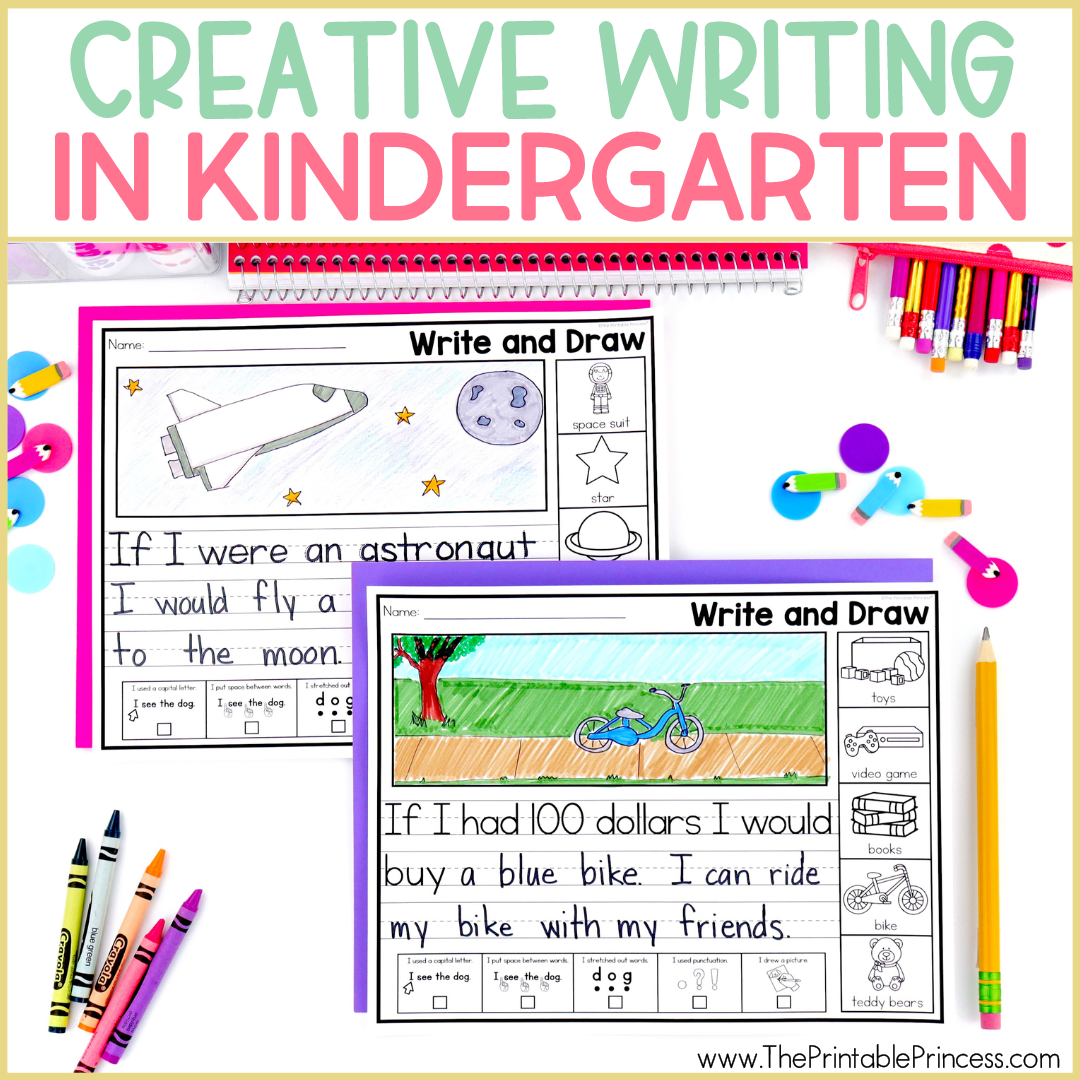
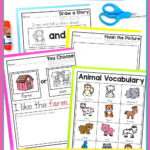
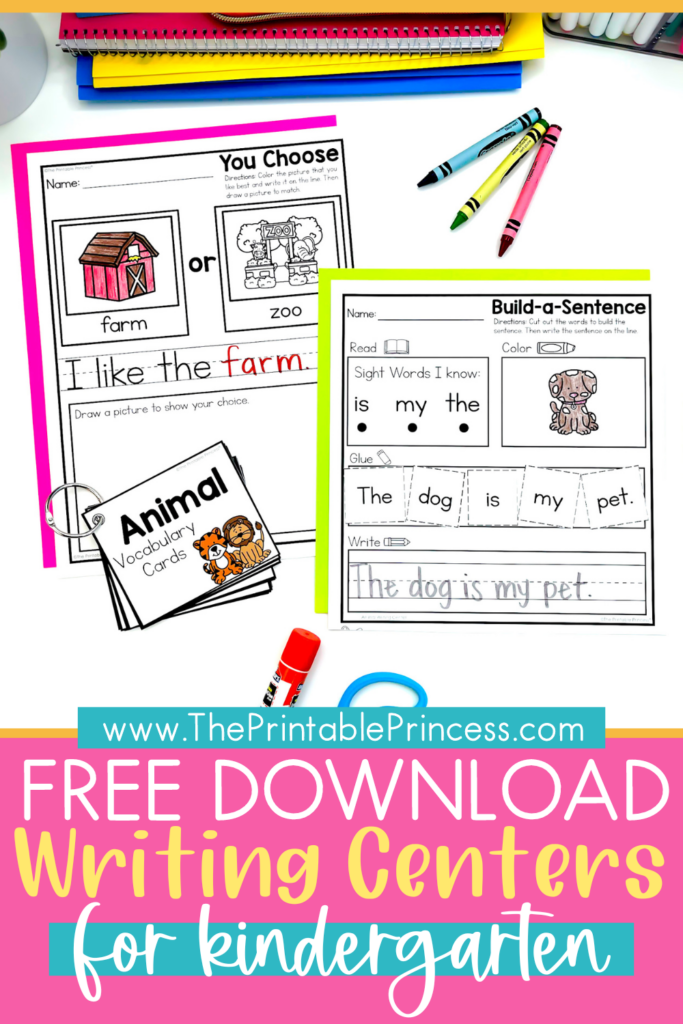
From there, model how to add details to drawings. The more details students have in pictures, the more ideas they'll have to write about. A great activity to use for this is You Choose, which gives students choice in their writing.
Model how to label a picture on the dotted line, where to start with your pencil on the line, how to write simple sentences, when to move to the next line, etc.
The more students can see you modeling it, the faster they'll catch on and begin to grow their own writing skills.
Tip #5: Start with drawings.
Many children don't come to kindergarten ready to write sentences or even simple words. Developmentally, students learn to draw before they write.
Expressing themselves through drawing is great for their creativity, fine motor skills, and learning to express their thoughts on paper. This is the first step that naturally leads to expressing themselves with words and sentences.
If you're looking for ways to help spark creativity in your students' drawing and writing, check out this blog post.
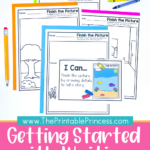
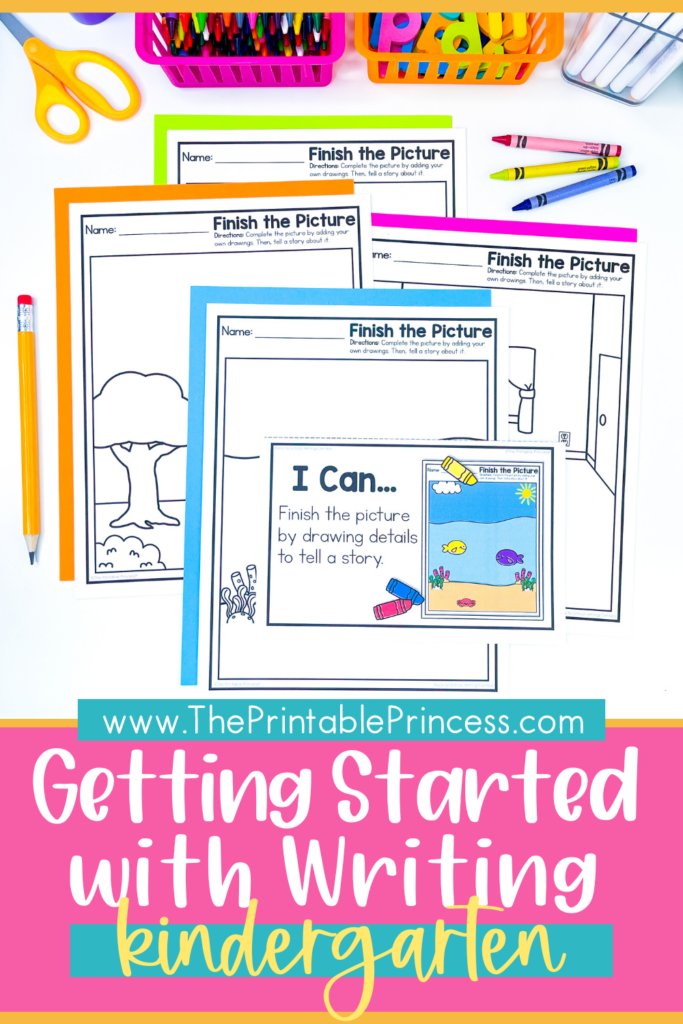
To practice, have students draw a picture using an activity like Finish the Picture. You can even do a simple step-by-step directed drawing on plain white paper. This helps build listening and direction-following skills too.
Tip #6: Label before you write sentences.
Writing sentences is so much more than holding a pencil correctly. Students need to know letters, sounds, spacing, punctuation, and sight words in order to write sentences.
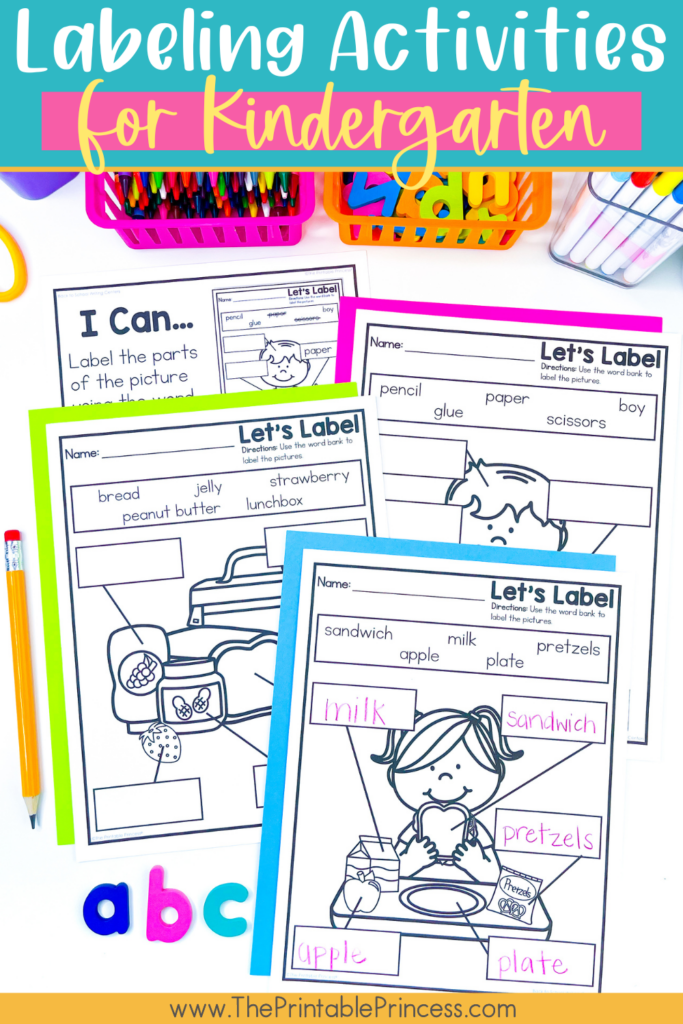
These are not skills that have been established at the beginning of the year. Start by having students label pictures that they draw with one single word.
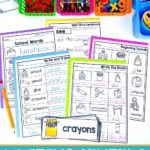
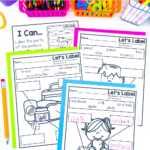
To reinforce this skill, you can incorporate labeling activities to build their vocabulary and writing skills.
Tip #7: Encourage students to write the sounds they hear.
As students learn about letters and sounds, start to tie those skills into writing. The more cross-curricular opportunities, the better!
Encourage students to write the sounds they hear. It won't be perfect, but this is the next step in the developmental process.
Make sure they have access to an alphabet chart so they can see what the letters look like when writing. This visual aid is key.
It's also helpful to ensure they have access to vocabulary posters and cards to help them with writing and generating ideas.
Free Kindergarten Writing Centers
Are you ready to help your students build their beginning writing skills, without the stress of planning activities that meet their needs?
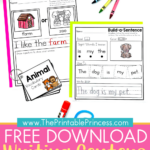
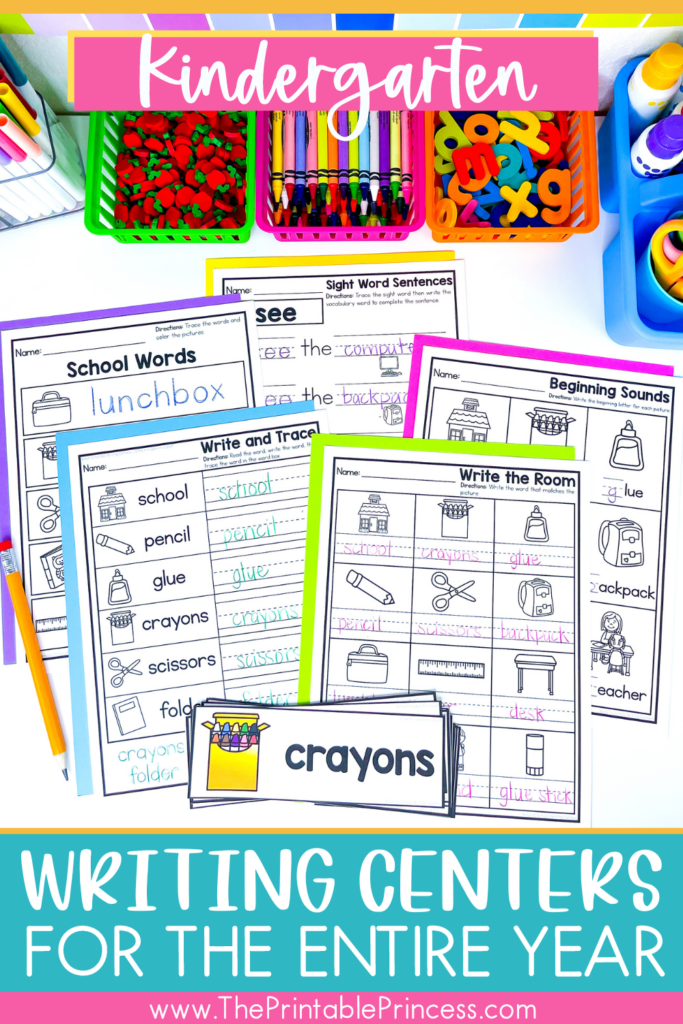
This set of FREE kindergarten writing centers was created just for kindergarten students to build foundational writing skills. The activities are low prep, making it perfect for busy teachers!
Fill out the form below and they'll be delivered straight to your inbox so you can use them right away!
I hope these beginning of the year writing tips for kindergarten help make planning your writing lessons and supporting your students easier.
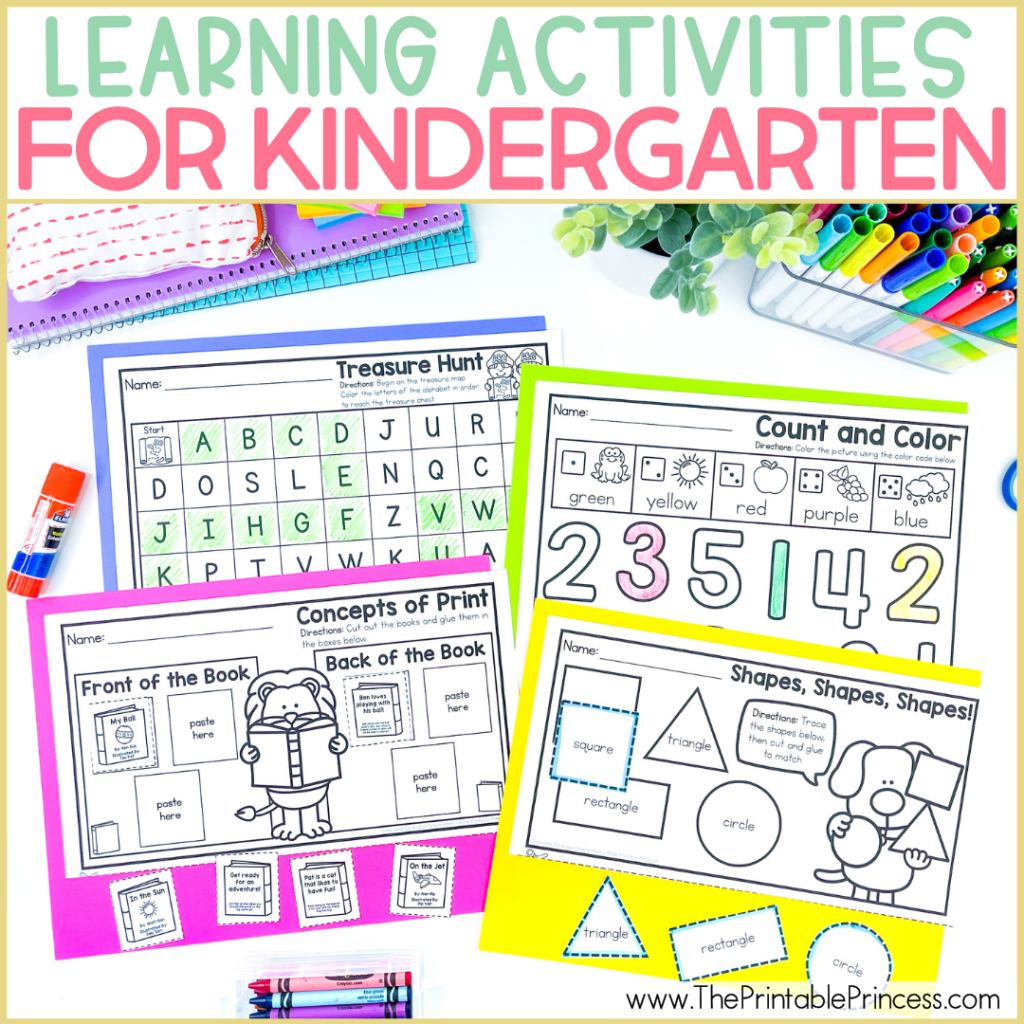
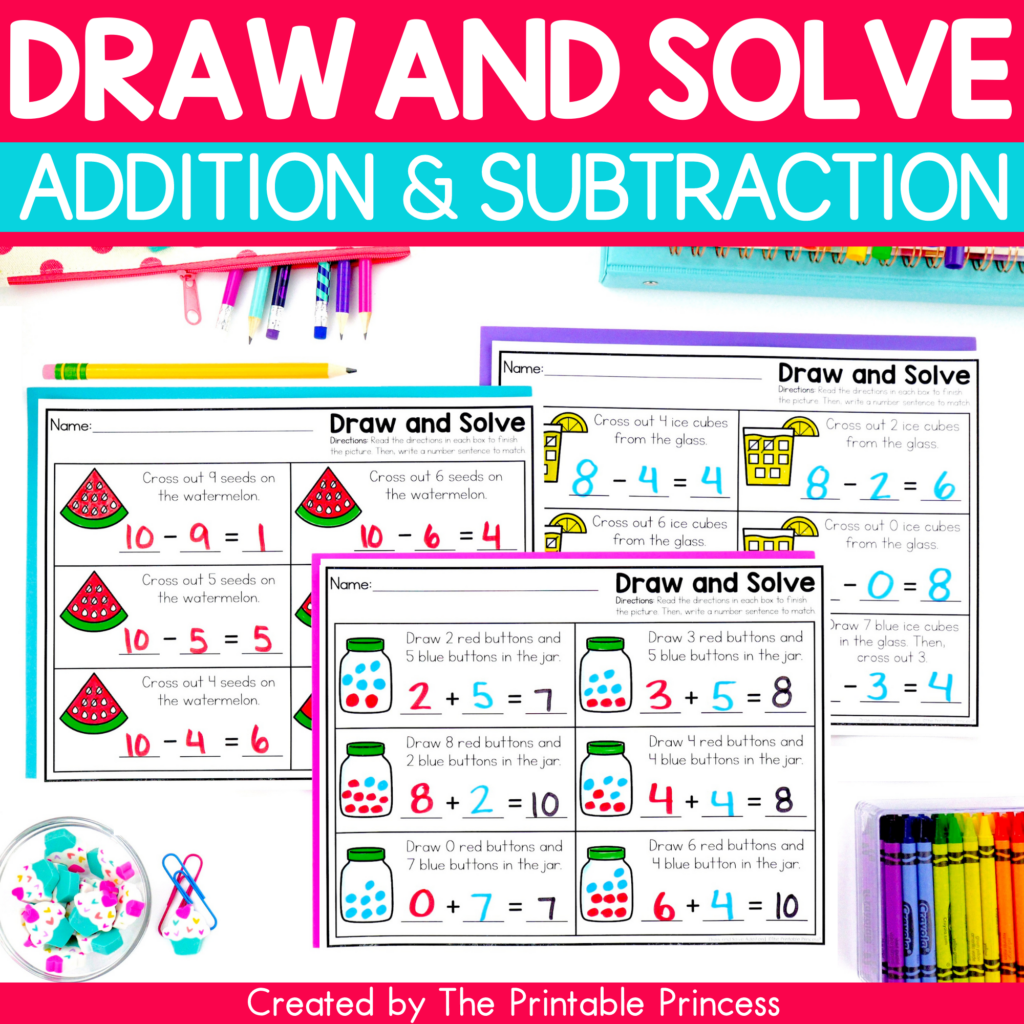
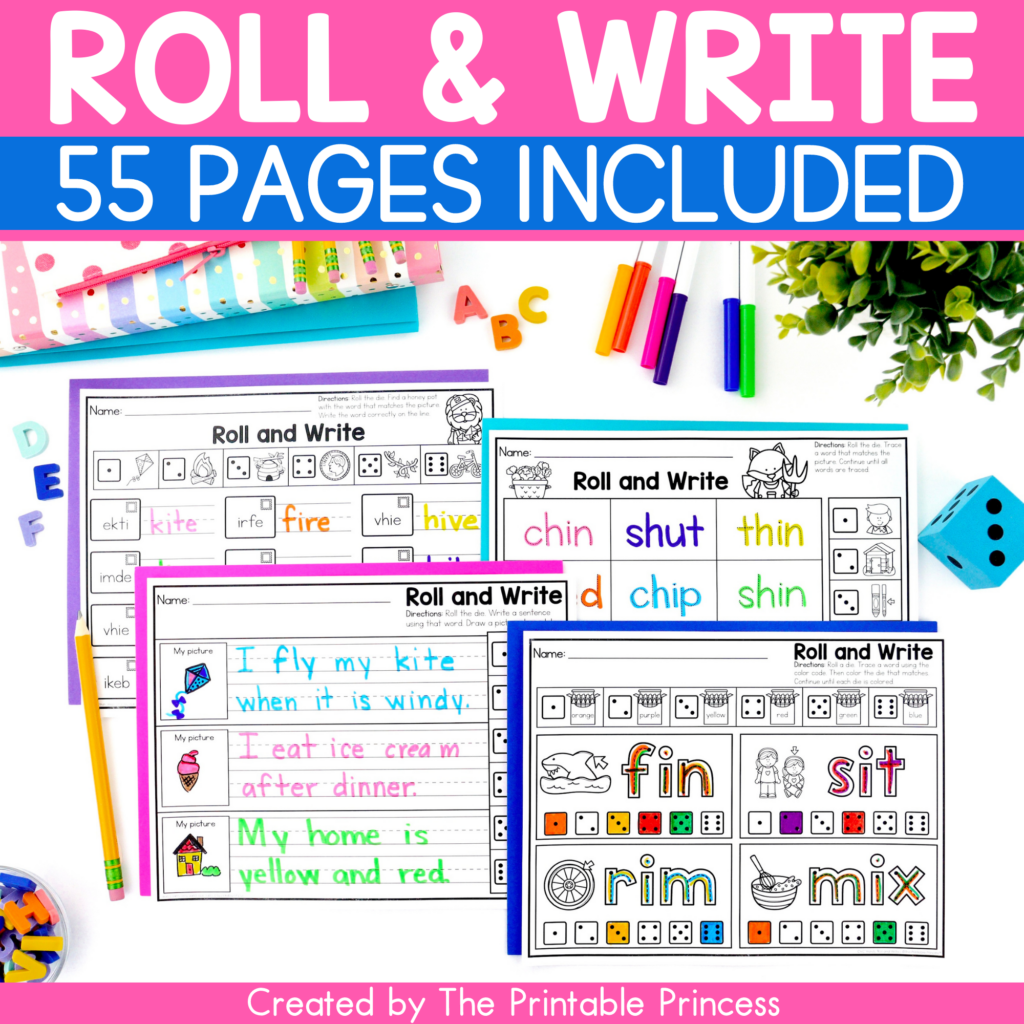
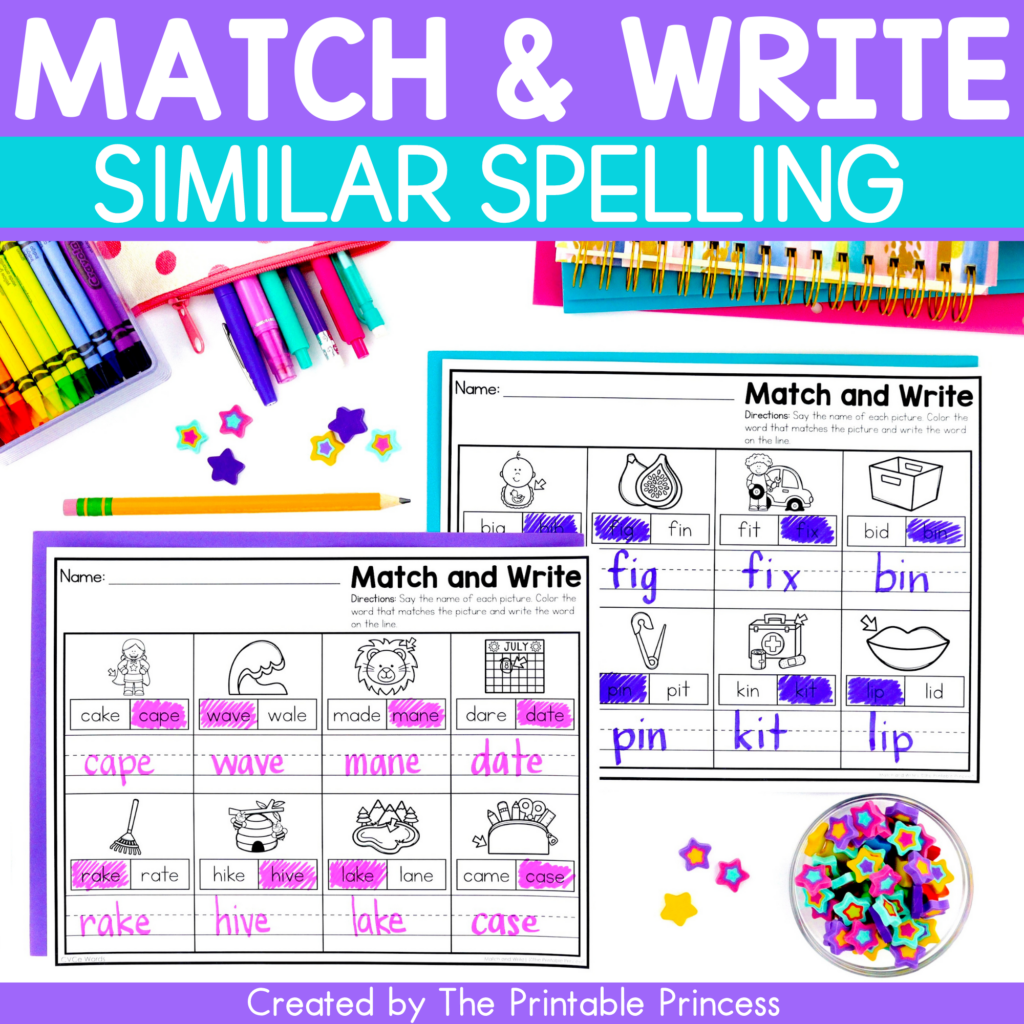
If you liked the activities you saw in this post, you can grab them in this Back to School Writing Centers activity pack.
Do you have a helpful tip for teaching kindergarten writing at the beginning of the year? Tell me in the comments below!