10 Rhyming Word Activities for Kindergarten
Nursery rhymes, silly songs, and classroom cheers. What do these all have in common? The ever-important literacy skill…rhyming! As students become more confident in their letter and sound recognition, they begin to work on key phonemic awareness and fluency skills with rhyming words. These 10 rhyming activities for kindergarten will help students lay a strong foundation for reading skills to come!
Why is it Important to Teach Rhyming Words?
Rhyming words are words that end with the same or a similar ending sound. When it comes to rhyming, it's all about phonemic awareness, which is the sounds that letters make. Not all rhyming words end with the same spelling, so it is important to teach students to listen for the sounds in words to determine if they end the same and rhyme.
Once students have a strong understanding of letter names and sounds, it's time to introduce rhyming words. Rhyming words are a key element in helping students segment words into sounds and hear patterns in words, thus improving their decoding skills and fluency. They also help students as they work with CVC words and other literacy skills in the future.
Rhyming Activities for Kindergarten
When it comes to teaching rhyming words in the classroom, it is important to keep the learning fun, upbeat, and provide a variety of activities for students to learn with. The more opportunities they have to work with rhyming words, the better. Activities that are hands-on and that include different words and rhyming pictures are key in keeping the engagement high.
#1: Rhyming Match-Up
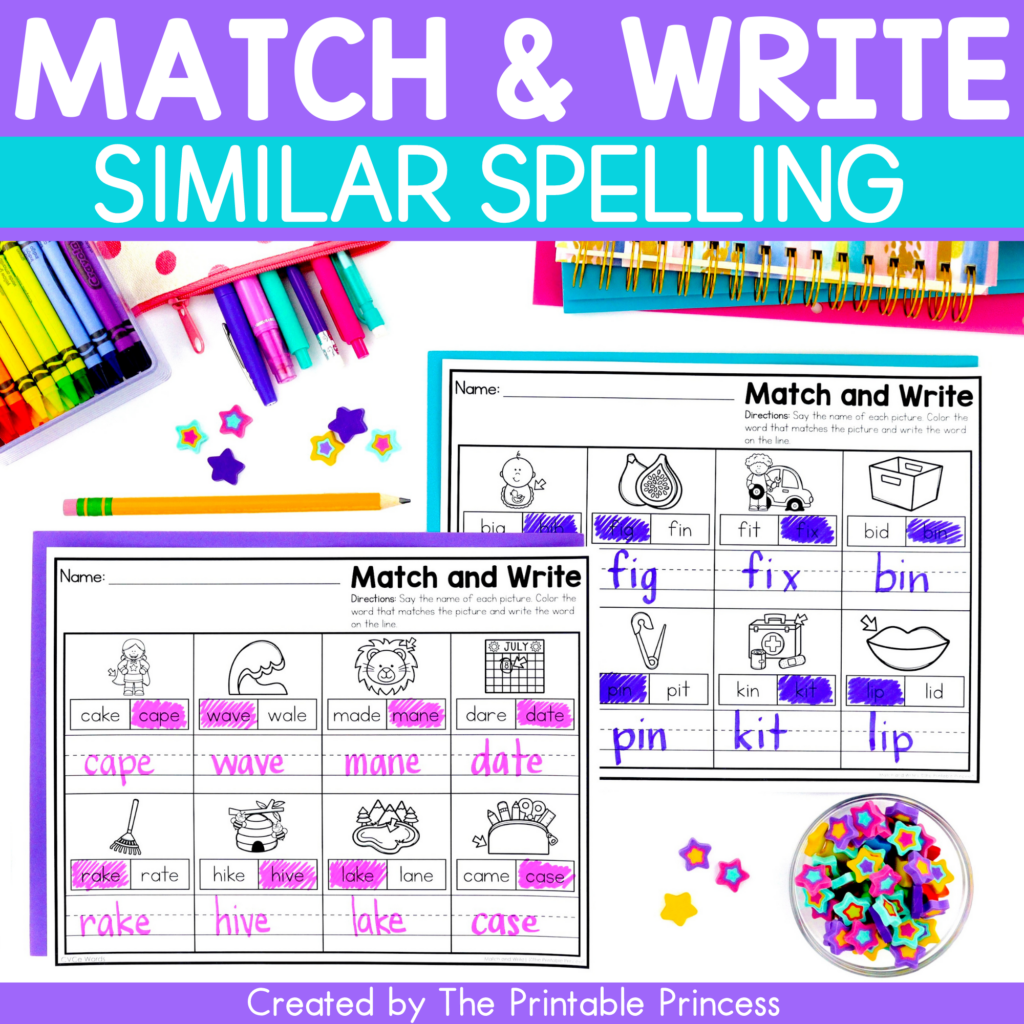
One of the most basic and effective rhyming activities for kindergarten is rhyming match-up! All you need for this activity are picture cards and/or word cards. You can draw simple pictures on notecards if you don't have picture cards in your classroom and save them for future activities!
There are a couple of different ways you can play this game. The first option is to have students match pictures based on if they rhyme. They can match pairs of pictures or make a whole stack of pictures that rhyme.
The second option is to have students match the picture card to a rhyming word card. This gives them a little more practice with decoding CVC words. This option is a bit more advanced as they will use their phonics skills as well as their phonemic awareness skills.
#2: Pass the Rhyme
Pass the rhyme is a fun circle time activity for students and requires zero materials or prep! The first person says a word out loud. The next person says a word that rhymes with that word. Play continues in a circle until all students in the circle have said a rhyming word.
This is a fun activity for students and is a great way to expose them to more words and give them ample opportunities to practice listening for those same ending sounds.
#3: Rhyming Mats
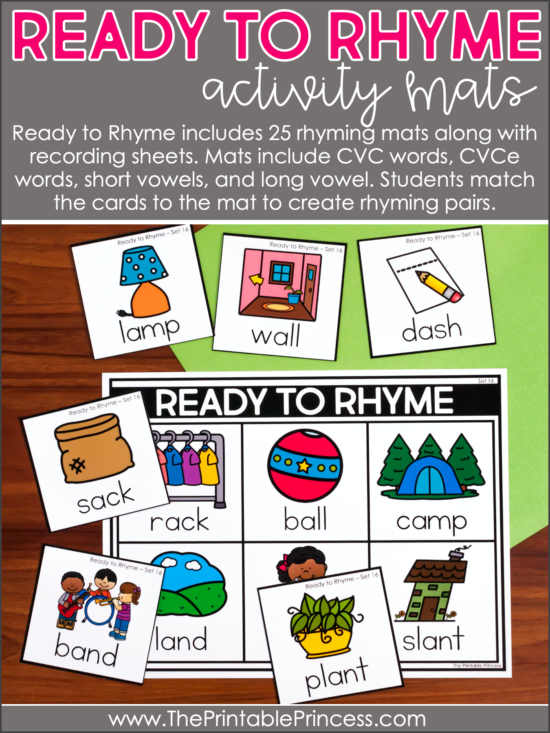
For a hands-on rhyming activity for kindergarten, rhyming mats are perfect! With these rhyming mats, students will look at the mat, say the name of a picture, and cover it with a rhyming picture card. Then they will record the rhyming words on their recording sheet, giving them an opportunity to practice writing and spelling the words.
These mats include 4 different sets: CVC words, CVCe words, short vowel words, and long vowel words.
#4: Rhyming Word Ladders
Word ladders are a great rhyming activity for kindergarten. This activity can be done as a whole group activity, in small groups, or during literacy centers. The first time you use this activity, I recommend doing it as a whole group activity on the big teacher whiteboard.
To begin, write a word at the bottom of the whiteboard. Have students think of a word that rhymes and write that word above it. Once they get the hang of the activity, you can have the students write the word on the board, going around the room until all students have had a turn and the ladder is complete!
This activity can easily be extended to work on phoneme substitution with rhyming words. To use the activity in this way, prompt students to change the beginning sound in the word to make a new word. This will help them understand that even though the beginning sound changes, the ending sound stays the same.
For example, to change the word from “bat” to “cat,” use language such as, “change the /b/ sound to a /c/ sound.”
#5: Sticky Note Rhyming
This DIY rhyming activity is super easy to prep and only requires sticky notes and either a whiteboard or piece of chart paper! Simply make columns on your whiteboard or chart paper with 1 word at the top of each.
You can make 5 columns and choose a different vowel sound for each column or you can differentiate and choose as many columns as you'd like and whichever word families you'd like. You can also draw a simple picture next to the focus word in each column as an additional visual aid for your students.
Next, write words that rhyme with each word on sticky notes. Again, you can write as many or as few words as you'd like depending on if you are using this as a small or whole group activity.
You can either pass out the sticky notes to students or have them draw a sticky note from a pile. Then have them come up and place their sticky note under the correct column, matching their rhyming word to the word on the board or paper.
#6: Rhyming Centers
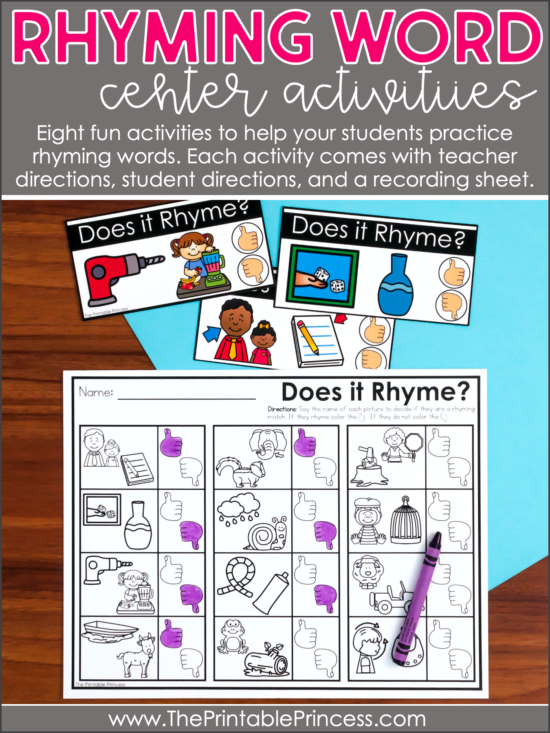
For a ton of hands-on, differentiated rhyming practice, rhyming centers take the cake! There are 8 different low-prep rhyming centers included, covering various skill levels. This allows you to differentiate to meet the needs of your students. Some students may be working on matching rhymes with “iRhyme” while others are producing rhymes with “Make a Rhyme.”
#7: Find the Rhymes
This rhyming activity for kindergarten also incorporates fine motor skills, which is a double-duty activity! In a large container of rice, cereal, noodles, or another sensory material of choice, hide rhyming picture cards or rhyming word cards. Students will use jumbo tweezers to pull out the cards, working to find 2 cards that rhyme.
#8: Build a Rhyme
This rhyming activity for kindergarten is super versatile and hands-on. All you will need for this activity are magnetic letters or another letter manipulative of your choice. There are many ways to play.
- Lay out a picture card and have students build a word that rhymes with it.
- Say a word and have students build a word that rhymes with it.
- Have students build 2 words that rhyme.
- Give students a word family and have them build as many words as they can with their manipulatives.
- Build the rhyming words they hear in a rhyming read aloud
#9: Rhyme the Room
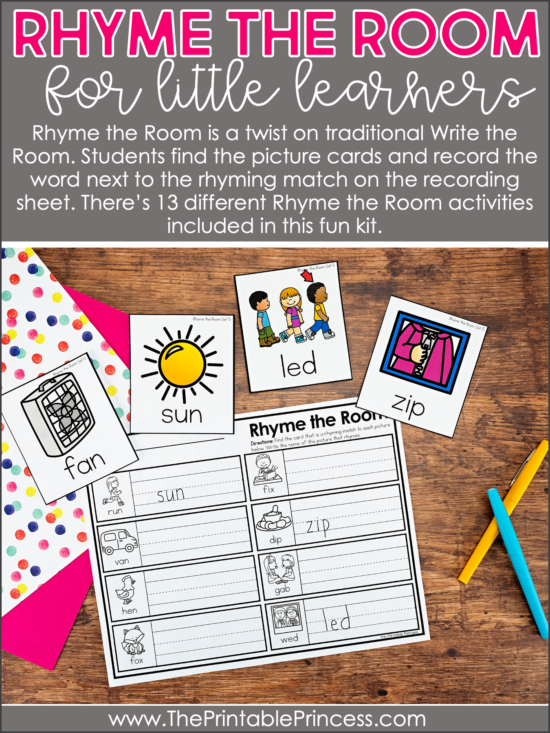
Need to get your students up out of their seats and actively learning? Rhyme the room is an effective way to keep students engaged and practicing rhyming words at the same time! There are 13 different activities included in this activity bundle. They can be used around the room or at a small group or literacy center.
Students will search to find the rhyming picture around the room that matches the picture on their recording sheet. They will write the word on the picture card next to the rhyming picture on their sheet. There are options for CVC words, CVCe words, and short vowel words.
#10: Rhyming Read Alouds
When it comes to teaching rhyming, using read alouds is one of the best ways to help students catch on to this skill! There is just something so powerful about read alouds, not only for developing a love of reading, but also for teaching skills such as rhyming!
Read alouds, nursery rhymes, and other books with a rhyming format are the perfect way for students to listen for the segments in words.
As you read, pause and talk about the rhyming words they hear in the story. It is also fun for students when the teacher pauses during reading to let them say the rhyming word that comes next! Plus, this ensures that they are on task and paying attention to the story!
Additional Rhyming Activities
Want to incorporate even more rhyming games and activities for kindergarten into your lesson plans? This rhyming bundle is jam-packed with 9 most-loved rhyming resources, including the rhyming centers, rhyming mats, and rhyme the room from above, along with 6 other resources, such as rhyming spin and cover, rhyming games, and more!
With these rhyming activities for kindergarten, your students will be rhyming masters before you know it. Rhyming truly is a fun concept to teach and a fun concept for students to learn. Work rhyming into your day whenever you can. That might be in the lunch line, in transition, or with these activity ideas! The more your students hear rhyming words, the faster their skills will grow!